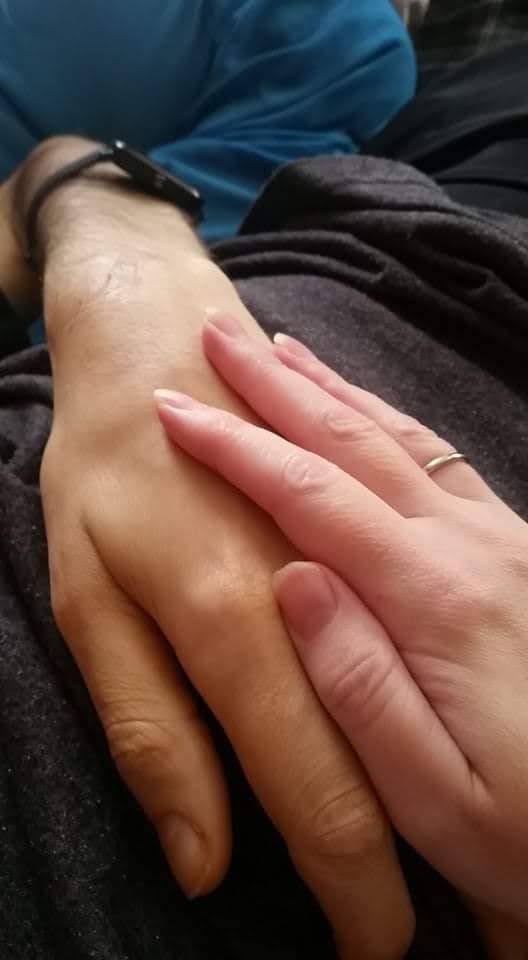
I am my own worst critic. I fail a lot. Of course my failures range from tipping over my water glass (that I knew was in a precarious spot), to work mistakes, to widowing incorrectly (I’m sure that others do it better and with far less snot and stress acne). Memories from my childhood are crowded with things I did wrong and outings that I ruined with stupid arguments; my mom’s memories are filled with those same days, but the arguments have fallen away and I am the perfect, loving daughter. (I know better, mom).
Looking back, much of my childhood was wrapped in a generalized anxiety disorder that I was too proud to admit I had (mental illness was still pretty taboo in the late eighties and nineties). For those with high functioning anxiety, there is nothing better than feeling like you have command of the situation and nothing worse than realizing that most things lie outside of your control. That illusion of control is the keystone that often kept me from crumbling into a sobbing heap throughout Horse’s cancer diagnosis and years of treatment.
Yet while I expected feeling sad and lonely as a caregiver (and now as a widow), I didn’t anticipate the intense feelings of failure and guilt that came with every decision and after every doctor visit and every memory. With each recurrence, that voice in my head would begin listing all of the things we had failed to do – more healthy smoothies, more exercise, more turmeric – and things we should have started sooner. The voice, while unreasonable in retrospect, could be quite persistent and unavoidable around midnight; “sleep,” it whispered, “is for quitters.” So instead, I researched medical treatments, alternative therapies, and obsessively checked the news for cancer breakthroughs, all the time wondering why I was so tired.
As time goes by, the research you do becomes less focused on cures and treatments, and more on basic things like nutrition and weight gain. If there is one thing I could control, I decided, it was his nutrition. In late winter/early spring of 2021 however, food started to lose all flavor and dishes he loved to eat became too salty, or had no taste at all. At each biweekly weigh-in before his treatments, every pound he lost felt like a kick to my face. I was frustrated and afraid that he would get too weak to continue with chemo and (worse) I was angry with Horse for not eating enough and not “trying harder” to maintain his weight. That fear was compounded by losing my father in March of 2021, when the part of the brain that helped him swallow was obliterated by mini strokes.
A year later, I don’t know how much of the desperation was fear for him, or for myself. There’s a quote attributed to Thomas Edison: Our greatest weakness lies in giving up. The most certain way to succeed is always to try just one more time – and it encompasses the daily mantra of a caregiver, but just like Edison, it’s more bravado than truth. Giving up is often synonymous with failure, but failure is also a frequent perfectionist companion to trying and getting a less than perfect result. And success, no matter the effort, is never guaranteed.
I think I knew that spring of ’21 would be our last together, but still, I refused to give up. Two days before the decision was made for him to go into hospice, I was busy at the food co-op getting more vitamins and healthy, calorie packed snacks. The collections of vitamins and supplements lined up like soldiers ready to attack the cancer – pocket knives against an armada.
Horse’s final trip to the ER was on Labor Day. No one from the palliative care team was available to help, as apparently people are only dying during weekdays, and definitely not on federal holidays. Standing in the room, Horse finally calm and asleep, I listened as the doctor told me he only had “days” left – certainly not the month to start his new treatment sitting unopened on our kitchen table. I remember being sad, but not at all surprised as his body was mostly yellow tinged skin and boney angles (another of my failures). What did surprise me, was the feeling of relief that sank deep into my shoulders – relief that I didn’t have to keep trying to fix him. This of course was quickly followed by the guilt of failing to fix him, as if I had that power – as if he had even expected me to (he didn’t).
As a manager, I have always preached that it is okay to fail. Often, failing is how we learn best and how we grow as people. How we deal with failure tells us more about who we are than if we always succeed. You may argue that I didn’t fail at being a caregiver or being a widow or wife, but I’d argue that it doesn’t change the feeling I have no matter how illogical the belief.
After all, who am I without him? I am not a spousal caregiver and not a wife. I am a 43 year old widow and I hate it. I am still exhausted from caregiving a year after his death because it’s so close it feels like yesterday. I do not feel strong no matter how many times people insist that I am, and I don’t know how to forgive myself for all of my failings, real or imagined. I guess I’ll continue to try each day, one more time, and maybe one of these days, I’ll succeed.
 They're Dead Now
Leave a reply to Lu Cancel reply